Pilgrimage to Sri Devpuriji's cave
A journey to high-altitude regions, offering a deeper experience of silence and space, both among the Himalayan peaks and within ourselves
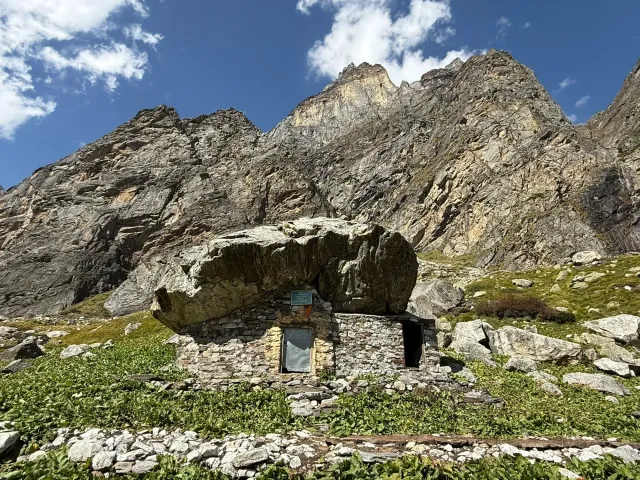
We invite you on a pilgrimage to the Indian Himalayas, to the region above sacred Badrinath, to places that are not merely geographical points on a map but living centres of spiritual tradition. The caves of Shri Devpuriji are among the tapasya sites of the great Himalayan masters associated with the Shri Alakhpuriji Guru Parampara lineage. These places are deeply rooted in the spiritual tradition of the Indian Himalayas and represent a space where, over many, many years, the practice of sadhana, absolute inner silence and complete realisation has flourished.
This pilgrimage continues into the higher Himalayan altitudes, into a space where the landscape becomes more dramatic, more open and more powerful. The journey passes through mystical places such as Laxmivan, Chakratirth, Satopanth and the Svargarohini region, places associated with the ancient stories of the Pandava brothers and their final pilgrimage at the end of the Mahabharata. Moving through this environment offers an intense mountain experience: silence, space, wind, ice and breathtaking views of the surrounding peaks. It is not merely a physical journey but a direct encounter with the energy of Shivaloka in its raw and unadorned form, a touch of the presence of Shri Devpuriji.
Gallery
Journey highlights
Rishikesh
Known as the yoga capital of the world. A sacred bath in the Ganges, the evening Ganga Aarti, Sivananda Ashram, Parmarth Niketan Ashram and Vashishtha Cave.
Devprayag
The confluence of the Bhagirathi and the Alaknanda, where the Ganges is born. Raghunath Mandir, the temple of Lord Rama, who performed tapasya here after the war with Ravana.
Karnaprayag and Vishnuprayag
Mountain towns and valleys of the Garhwal Himalaya: the confluences of the Alaknanda with the Pindar and with the Dhauli Ganga.
Joshimath
One of the four spiritual centres, or maths, of India founded by Adiguru Shankaracharya. The Kalpavriksha tree beneath which the Adiguru meditated, Narsingh Temple and Bhavishya Kedar Temple.
Badrinath
One of the four Dhams, the sacred centres of the Himalayas. The renowned Badrivishal Temple and Tapt Kund, a bath in the hot Himalayan springs.
Mana
The last village before Tibet, with the caves of Vyas Gufa and Ganesh Gufa.
The Alaknanda valley and Vasudhara waterfall
The walk up the valley of the Alaknanda above Mana leads past the Vasudhara waterfall, which falls in a single thread from the cliffs, and on towards the caves.
Sri Alakhpuriji's caves
Time spent in the meditation area at the cave and the full-moon satsang with Shri Avatarpuriji, before the group continues higher.
Sri Devpuriji's cave
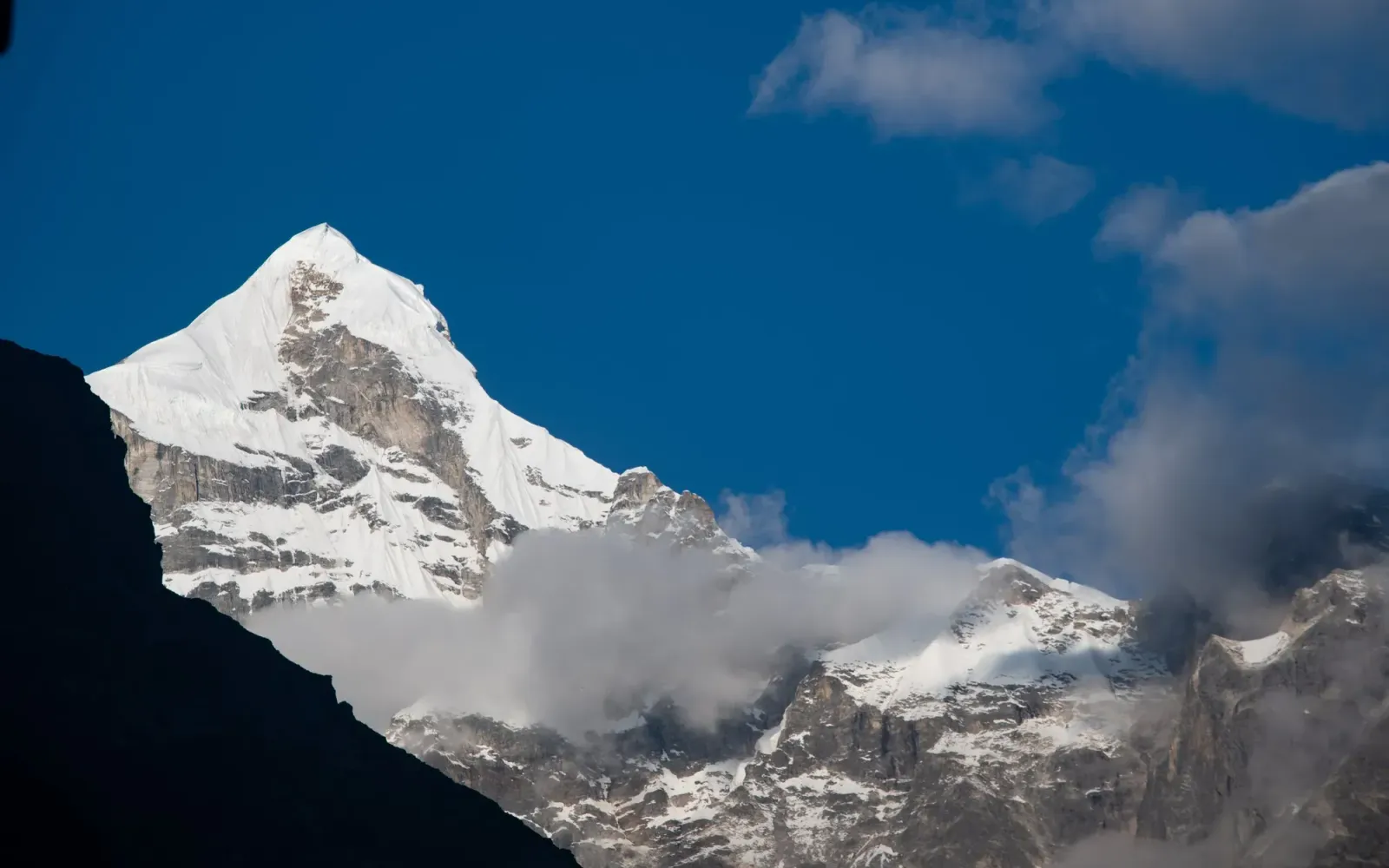
The trek continues through high-altitude terrain to the cave of Sri Devpuriji at about 4,450 metres near Svargarohini: glaciers, the wall of the Sahasradhara waterfalls, the sacred Mount Neelkanth and the seven-thousander Chaukhamba, and the mystical Himalayan lake Satopanth Tal.
Haridwar
In Mana we meet the group from Sri Alakhpuriji's cave and travel together via Joshimath to Haridwar: the Ganga Arati and a bath at Har Ki Pauri, and shopping in the bazaars.
Sadhana in the mountains
The pilgrimage is not built on covering ground but on presence: on the gradual stilling of the mind, simplicity and the harmony of the mountain environment. After the full-moon satsang at Sri Alakhpuriji's cave the trek continues into open high-altitude terrain, where silence, space, wind and ice become the practice itself. Mornings and evenings are given to sadhana and yoga practice, and for seven days in the mountains there is no phone signal or electricity to draw the attention outward.
Is this pilgrimage for you?
This pilgrimage is intended for students of Yoga in Daily Life, for whom the caves are part of their spiritual lineage, and for anyone who feels a connection to the authentic yoga tradition and is drawn to the raw, open landscape of the high Himalayas.
Late September and early October bring clear post-monsoon skies to the Garhwal Himalaya. Days at altitude are sunny, but nights in the high camps fall well below freezing and the wind is constant, so warm layers and a good sleeping bag are essential.
- You are comfortable with several days of trekking at 3,000 to 4,500 metres, with local porters carrying the camp.
- You can sleep in a two-person tent on a foam mat and manage with tent toilets at the camp.
- You accept seven days without phone signal or electricity in the mountains.
- You are happy with simple, mildly spiced lacto-vegetarian food throughout.
How we travel
The pilgrimage begins on Sunday 20 September 2026 with individual arrivals in Dehradun, ideally around noon, and ends on 3 or 4 October with a transfer to Dehradun Airport; we are glad to advise on international and domestic flights.
Transport
From Dehradun to Badrinath and Mana and back we travel in air-conditioned minibuses or taxis. Above Mana the route continues on foot, with porters carrying the camp.
Accommodation
Standard mid-range hotels and guesthouses, mostly in double rooms with private bathroom and air conditioning. In the mountains we sleep in good two-person tents with a foam sleeping mat; the camp has tent toilets.
Meals
Full board throughout: breakfast, lunch and dinner at trusted restaurants or hotel dining rooms. In the mountains experienced local cooks prepare hearty meals in the heart of nature. Traditional Indian lacto-vegetarian cuisine, mildly spiced and adapted to the group.
After the pilgrimage
You can continue on your own: fly home (we can arrange accommodation in Delhi with airport transfers for about 50 EUR), travel on to Om Ashram in Jadan in Rajasthan, or take an Ayurvedic wellness or therapeutic stay at one of our partner centres.
Accompanied by
Mahamandaleshwar Swami Shri Avatarpuriji Maharaj, successor of Vishwaguru Maheshwarananda, founder of the Yoga in Daily Life system and creator of Om Ashram, has promised to bless the pilgrimage with his presence at Sri Alakhpuriji's cave, where both groups share the full-moon satsang before ours continues higher towards the cave of Sri Devpuriji.
The journey is organised and led by Deveshwar Travels together with local guides, cooks and porters in the mountains.
Price
- Double or twin room
- €1,450 per person
Flights are not included.
The price includes
- Full board throughout the pilgrimage
- Accommodation in hotels and guesthouses, and in two-person tents in the mountains
- Transport from Dehradun to Badrinath and Mana and back, and the transfer to Dehradun Airport
- Local guides, cooks and porters in the mountains
- The tour leader throughout the journey
- Organisation and coordination in India
The price does not include
- International and domestic flights
- Indian visa
- Travel insurance
- Personal expenses
- Accommodation in Delhi after the tour
How to join the journey
Tell us you are interested.
Complete the short form below. It is free and does not oblige you to book.
Receive the booking documents.
We send the confirmed price, services, payment schedule, a draft tour contract and the terms and conditions.
Confirm your place.
Sign the contract, return it and pay the reservation deposit shown on the invoice.
Arrange flights and documents.
We recommend flight connections and guide you through the visa and travel preparations.
Meet the group in India.
We meet arrivals in Dehradun within the agreed time window.
Good to know
- The programme may change according to the weather and the condition of the trails; the order of stages and the high camps are adjusted on the spot.
- Participants need a valid passport, an Indian visa and travel insurance covering trekking at high altitude.
- The trek requires good health and gradual acclimatisation; we ascend slowly and spend several days above 3,000 metres before the highest camp.
Thank you, we have your enquiry.
We will get back to you personally, usually within two working days, with the full information and the next steps.