Shiva Bhakti journey 2026
Shiva temples and Jyotirlingas from Mumbai to Mahashivaratri at Om Ashram
This journey has already taken place. Similar journeys are planned; write to us if you would like to hear about the next one. Write to us
Shiva Bhakti is a journey of devotion rather than sightseeing. It begins among the old temples of Mumbai and climbs into the Western Ghats to Trimbakeshwar, the first Jyotirlinga on our route, then continues across the Deccan to the rock-cut wonders of Ellora and the quiet shrine of Grishneshwar. In Madhya Pradesh we reach Omkareshwar on its island in the Narmada and Ujjain, the city of Mahakala and the Bhasma Aarti, before turning into south-eastern Rajasthan, where the temples of Bijolia and Menal, the forts of Chittorgarh and Kumbhalgarh, the marble halls of Ranakpur and the cave shrines of the Aravalli Hills lead us to Om Ashram at Jadan. There the journey culminates in two days of yoga, seva and meditation and the night of Mahashivaratri.
Gallery
Places along the way
Mumbadevi Temple
The Mumbadevi Temple is dedicated to the goddess Mumbadevi, protector of the city, from whom Mumbai takes its name. The original temple stood on the shore beside a fishing settlement, where the goddess watched over the local community. Later, as the city grew and the coastline changed, the temple was moved inland, where it stands to this day. Several deities are worshipped inside, since in Hindu tradition divine powers are understood as different aspects of one whole: protection, strength, prosperity and balance. Mumbadevi is still revered as the Mother of the city, to whom everything symbolically returns.
Babulnath Temple
Babulnath Mandir is one of the oldest Shaiva temples in Mumbai, dedicated to Lord Shiva in his calm and protective form. According to tradition, the Shiva lingam was found beneath a babul tree, which gave the temple its name. The temple stands on a rise above the city and offers a symbolic overview of the bustle of Mumbai. Local people often come here early in the morning for calm, balance and quiet attunement. It is a place of stillness in the midst of the city's motion.
The city of Nashik and the Kumbh Mela
Nashik is one of the most sacred cities in India and is closely bound to the Shaiva tradition. It lies on the banks of the Godavari river and is one of the four places where the Kumbh Mela, the largest pilgrim gathering in the world, is held. During the Kumbh Mela, millions of people gather for a purifying bath in the river as a symbol of a new beginning and inner transformation. This tradition gives Nashik a calm, serious and deeply spiritual atmosphere. It is a place of quietening, of a return to simplicity and of contact with the flow of life.
Trimbakeshwar Mandir
Trimbakeshwar Mandir is one of the twelve most sacred places dedicated to Shiva, the Jyotirlingas. It lies in the hills of the Western Ghats near Nashik, right at the source of the Godavari, a river revered in India as the 'Ganga of the South'. What sets this temple apart is its unique triple lingam, which represents not Shiva alone but three cosmic principles: creation (Brahma), preservation (Vishnu) and transformation (Shiva). Trimbakeshwar is thus a place where the whole cycle of life meets at a single point.
Kala Ram Temple
One of the most important temples in Nashik, dedicated to the god Rama. It is built of black stone (kala means black) and is closely linked to the bhakti tradition. The temple played an important role in modern Indian history as a site of the struggle against caste discrimination.
Pandavleni Caves
Pandavleni, also known as the Nashik Buddhist caves, is a group of ancient cave monasteries cut into the rock above the city of Nashik. They were created roughly between the 2nd century BCE and the 3rd century CE, at a time when Buddhism was spreading rapidly along India's trade routes. The caves served above all as meditation retreats and dwellings for monks, who spent the rainy season (vassa) here in silence, study and contemplation. These are not ostentatious temples but austere, ascetic spaces that support concentration and inner calm. The name Pandavleni is a folk name referring to the heroes of the Mahabharata; historically the caves have no direct connection with the Pandavas.
Ellora Caves
The Ellora Caves are one of the most important spiritual and cultural sites in India and a UNESCO World Heritage Site. They form an extensive complex of rock-cut temples and monasteries carved directly into the cliff between the 6th and 10th centuries. What makes Ellora exceptional is that three great spiritual traditions of India meet here in one place: Buddhism, Hinduism and Jainism. Not as rivals, but as parallel paths in the search for truth. The best-known part of the complex is the Kailasa Temple (Cave 16), a monumental Shaiva temple carved from top to bottom out of a single piece of rock. It is dedicated to Mount Kailash, the mythical abode of Shiva, and is regarded as a technical and spiritual wonder of the ancient world.
Grishneshwar Jyotirlinga
Grishneshwar Mandir is one of the twelve most sacred shrines of Shiva, the Jyotirlingas, and is considered the last of them in the traditional order. It lies close to Ellora, in the landscape of the Deccan plateau, and forms a quiet counterpoint to the monumental rock-cut temples. Unlike the grandeur of Kailasa, Grishneshwar feels simple and direct. Its strength lies precisely in that simplicity: here Shiva is not a cosmic mountain but a principle present in a single point. According to tradition, the temple is associated with devotion and perseverance, with a return to the essence after a long journey.
Omkareshwar
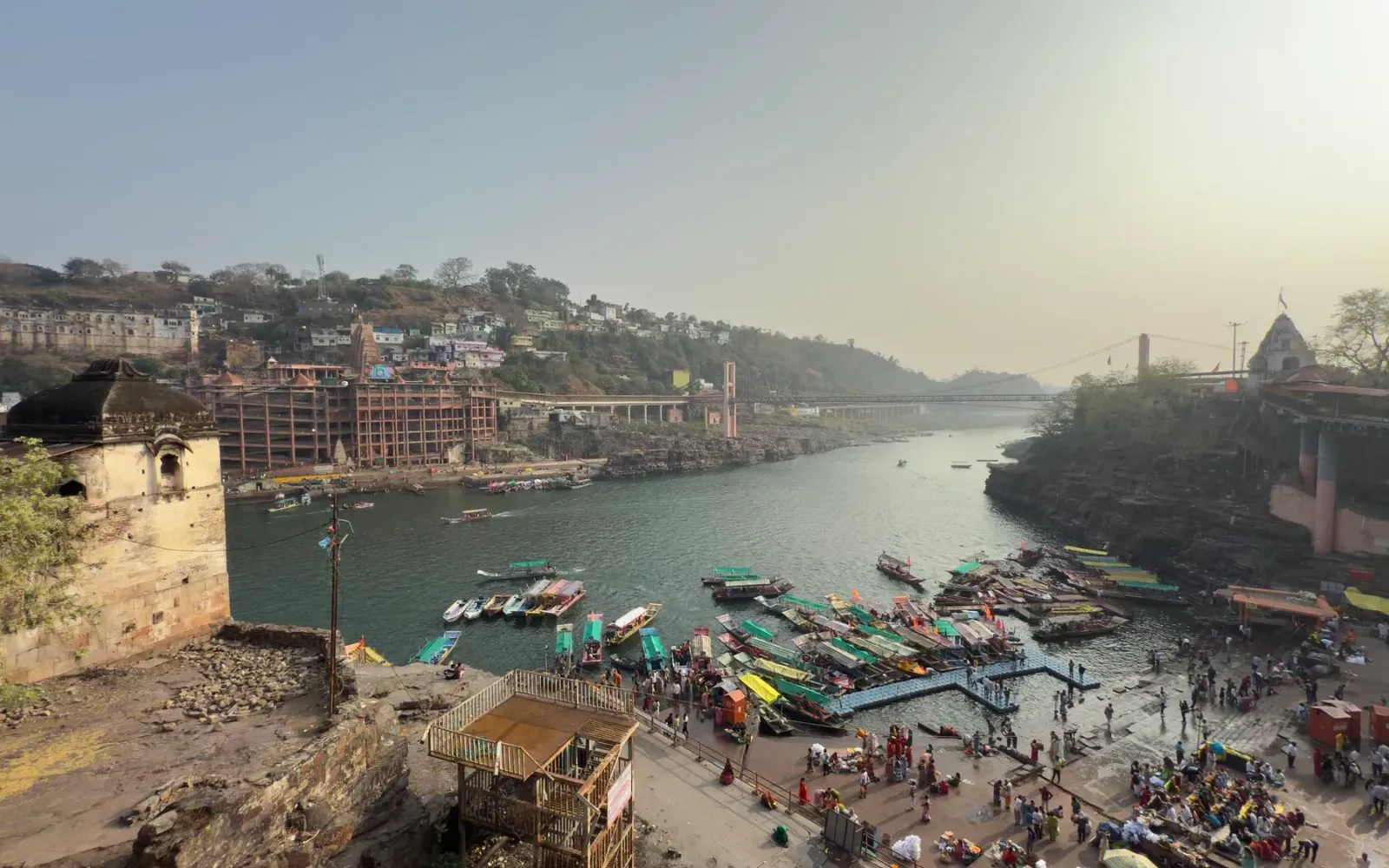
Omkareshwar Mandir stands on an island in the middle of the river and is one of the twelve Jyotirlingas, the most sacred shrines of Shiva in India. The temple is already mentioned in ancient texts and its present form dates mainly from the medieval period. It is the main shrine of the town and the central point of the pilgrimage.
Mamaleshwar Mandir
According to tradition, Mamaleshwar Mandir is considered the older place of Shiva worship. Mamaleshwar has a calmer atmosphere and simpler architecture, but its ritual significance is equal.
Mahakaleshwar Jyotirlinga
Mahakaleshwar is one of the twelve most sacred Shiva temples in India, the Jyotirlingas. In Ujjain, Shiva is worshipped as Mahakala, the 'Lord of Time': the power that not only measures time but transcends it. The temple stands in one of the oldest continuously inhabited cities in India, and its importance is closely tied to Ujjain's role as an ancient centre of astronomy and timekeeping. It was here that the 'right time' for rituals, festivals and calendars was determined for centuries. A special feature of Mahakaleshwar is the Bhasma Aarti, a morning ceremony (around 4 a.m.) in which the Shiva lingam is symbolically worshipped with sacred ash (bhasma). This ritual is unique in India and is a powerful reminder of the impermanence and transformation of everything material. Mahakaleshwar is today among the most visited temples in the country: typically 100,000 to 200,000 pilgrims pass through every day, several million every month and tens of millions every year. Despite these enormous numbers, the temple retains an intense and concentrated atmosphere, especially during early-morning visits, when the energy of the place is at its purest and calmest.
Vedh Shala (Jantar Mantar)
Vedh Shala is a historic astronomical observatory in Ujjain, also known as Jantar Mantar. It was built in the 18th century by Maharaja Jai Singh II, who had several stone observatories built across India for precise astronomical measurements. Vedh Shala consists of large stone measuring instruments that were used to observe the movements of the Sun, the Moon and the planets. These are not symbolic structures but working astronomical instruments, used long before the arrival of modern telescopes. The place beautifully links science, spiritual tradition and the cosmic order that in India has always been understood as an integral part of religious and everyday life.
Sandipani Ashram
The ashram of the sage Sandipani is one of the most important places in Ujjain connected with the tradition of learning. According to tradition, Krishna, Balarama and Sudama studied here in the gurukul system under their teacher Sandipani. The place recalls the ancient ideal of Indian education, in which the study of scripture was joined with discipline, service and spiritual practice. The grounds also include the Gomti Kund, a water tank said to have been brought here by Krishna at his teacher's wish. Today the ashram is a peaceful place symbolising humility, learning and the bond between pupil and master.
Bijolia
Bijolia is an ancient pilgrimage and cultural site in south-eastern Rajasthan that was already an important centre of the Shaiva tradition in the early medieval period. The site was especially significant between the 9th and 12th centuries, when a group of temples dedicated to Shiva was built here in the typical North Indian (Nagara) style. Bijolia then served as the religious, educational and administrative centre of the region. The temple complex stands beside a water tank and is surrounded by a landscape that still feels calm and secluded. It is this union of Shiva, stone, water and silence that gives Bijolia a special atmosphere, unlike the large and busy pilgrimage sites. Bijolia recalls a time when Shaiva temples were not only places of worship but also focal points of spiritual and social life.
Menal
Menal is an ancient Shaiva pilgrimage site set in a deep rocky gorge in south-eastern Rajasthan. It is a complex of temples from roughly the 11th and 12th centuries, built in the typical North Indian style and dedicated chiefly to Shiva. The temples stand right on the edge of a canyon through which a seasonal river flows. After the monsoon, waterfalls form here and give the place an extraordinarily powerful atmosphere: a union of Shiva, stone, water and empty space. Menal was never a large urban centre but rather a secluded spiritual place suited to ascetic practice, meditation and ritual. Here the landscape plays as important a role as the architecture itself.
Chittorgarh Fort
Chittorgarh is one of the largest forts in India and the symbolic heart of Rajput culture. The fort stands on a massive rocky plateau and for centuries was the seat of power of the Sisodia dynasty of Mewar. Chittorgarh is associated with three famous sieges (1303, 1535 and 1568), in which its defenders faced overwhelming odds. The city became a symbol of the Rajput ideal of dharma: honour, courage and loyalty, even at the cost of total destruction. These events profoundly shaped the identity of Mewar and of the whole region.
Meera Temple
The temple of Meera Bai commemorates the poet and saint who sang her devotion to Krishna here. It is precisely the contrast between the sword, the goddess and devoted love that gives Chittorgarh its exceptional depth.
Kalika Mata Temple
Another important spiritual site within Chittorgarh Fort is the Kalika Mata Temple, originally an 8th-century sun temple that was later dedicated to the goddess Kali. The temple represents the protective and martial aspect of the feminine divine power (Shakti) and was an important place of prayer before battle.
Shreenathji Temple
Nathdwara is one of the most important centres of the Vaishnava tradition in India. Its main shrine is the temple of Shrinathji, a form of Krishna as a young boy lifting Mount Govardhan. Nathdwara is the centre of the Pushtimarg (Path of Grace), which emphasises a personal and joyful relationship with God. Darshan here is not ascetic: it is a meeting with a 'living child' who is dressed, adorned and worshipped with love and beauty. The atmosphere of Nathdwara differs from that of the Shaiva pilgrimage sites: less silence, more colour, music and joy. It is a place where God is experienced as near and beloved.
Kumbhalgarh Fort
Kumbhalgarh is one of the most imposing forts in India and, after the Great Wall of China, the second-longest continuous wall in the world. Its fortifications run for roughly 36 kilometres along the ridges of the Aravalli Hills. The fort was built in the 15th century by Rana Kumbha of the Sisodia clan as an impregnable refuge for Mewar. Thanks to its position high in the hills, it remained almost unconquerable for centuries. Within the complex are more than 360 temples, mostly Hindu but also Jain. Among them stands out the Neelkanth Mahadev Temple, dedicated to Shiva, which symbolises the protection and spiritual stability of this place.
Parashuram Mahadev
Parashuram Mahadev is an ancient Shaiva temple hidden deep in the Aravalli Hills, reachable only on foot along a pilgrim path. The temple lies in a natural rock cave and is dedicated to Shiva. According to tradition, Parashurama, the sixth avatar of Vishnu, performed penance here after laying down his weapons and seeking reconciliation. It was here that he is said to have carved a Shiva lingam into the rock and founded a place of worship. The temple is reached by a descent of around 500 steps through forest and rock. The walk itself is regarded as part of the pilgrimage: quiet, physical and purifying. Parashuram Mahadev is a place where nature, asceticism and the Shaiva tradition come together, far from cities and crowds.
Ranakpur
Ranakpur is one of the most important Jain pilgrimage sites in India and one of the high points of Indian temple architecture. It lies in a remote valley of the Aravalli Hills, between Kumbhalgarh Fort and the lowlands of Marwar, in a landscape that itself feels calm, enclosed and almost ascetic.
Bhawar Gufa
Bhawar Gufa is a natural rock cave with a Shaiva shrine and lingam. The space is very simple, without architectural display, and feels more like a place of personal prayer and recollection. The cave was not built as a monument but accepted as it is, a typical example of the Shaiva relationship with nature, in which stone is not an obstacle but a bearer of the sacred.
Narlai
Narlai is an ancient village in the Aravalli Hills, known as a local pilgrimage place with many smaller temples and shrines. Spiritual life here is not concentrated in a single main complex but spreads naturally through the whole village, among the houses, rocks and paths. The temples are still alive and in use, closely bound to the everyday life of the villagers.
Neepal Ashram
A quiet spiritual centre in the Aravalli Hills, visited in the afternoon on the way from Narlai to Om Ashram.
Om Ashram and Shivaratri
Om Ashram at Jadan in the Pali district of Rajasthan is the international centre of Yoga in Daily Life. Its central complex is built in the form of the Sanskrit symbol Om, with 108 residential units arranged like the beads of a japa mala, and a Shiva temple of pink sandstone stands within the grounds. The journey ends here with two days of yoga, seva and meditation, culminating in Mahashivaratri, the great night of Shiva, celebrated with pujas, bhajans and an all-night vigil.
Itinerary
Day 1Mumbai
Babulnath Temple – a historic 12th-century Shiva shrine on a hill Mumbadevi Temple – the sacred home of the city's patron goddess Evening meditation on Marine Drive – sunset and calm by the sea
Overnight: Mumbai
Day 2Mumbai – Nashik
Drive: Mumbai – Nashik (approx. 5 h) Trimbakeshwar Jyotirlinga – a unique three-faced Shiva shrine
Overnight: Nashik
Day 3Nashik
Morning prayer at the Godavari ghats – peaceful meditation by the river Kalaram Temple – an important Rama shrine of black stone Pandavleni Caves – ancient Buddhist caves with a view
Overnight: Nashik
Day 4Nashik – Ellora
Temples carved from volcanic rock (UNESCO) Drive: Nashik – Ellora (approx. 5–6 h) Kailasa Temple – the principal monument of Ellora Short visit to other selected caves
Overnight: Aurangabad
Day 5Ellora – Omkareshwar
A journey between two Jyotirlingas Morning darshan at Grishneshwar Jyotirlinga – one of the 12 sacred Shiva shrines Ellora Buddhist and Jain caves Drive: Ellora – Omkareshwar (approx. 6 h) Evening aarti on the Narmada – the spiritual atmosphere of the sacred river
Overnight: Omkareshwar
Day 6Omkareshwar – Ujjain
Shiva on the Narmada and the road to the city of the Kumbh Morning darshan and meditation at Omkareshwar Jyotirlinga Mamaleshwar Temple – an equally sacred Shiva shrine on the mainland Drive: Omkareshwar – Ujjain (approx. 4 h)
Overnight: Ujjain
Day 7Ujjain
The principal Jyotirlinga and the Bhairava tradition Mahakaleshwar Jyotirlinga – home of the famous Bhasma Aarti Kal Bhairav Temple – living tantric traditions; Vedh Shala (Jantar Mantar) Sandipani Ashram – linked with Krishna's education Walk along the Kshipra ghats – meditation by the river
Overnight: Ujjain
Day 8Ujjain – Bijolia – Menal
Hidden Shaiva heritage Drives of approx. 5–6 h plus a further 1.5–2 h Bijolia temples – a historic centre of Shaivism Menal – gorge, (seasonal) waterfalls and ancient temples
Overnight: Menal
Day 9Menal – Chittorgarh
Fortress of courage and devotion Drive approx. 2 h Chittorgarh Fort – one of the largest forts in India Meera Temple and Kalika Mata Temple – shrines of strength and devotion
Overnight: Chittorgarh
Day 10Chittorgarh – Nathdwara – Kumbhalgarh
Devotion to Krishna and mighty walls Drives totalling approx. 4 h Shreenathji Temple – a major Vaishnava pilgrimage shrine in Nathdwara Kumbhalgarh Fort (UNESCO) – the famous fort with the second-longest wall in the world Neelkanth Mahadev Temple – inside the fort complex
Overnight: Kumbhalgarh
Day 11Kumbhalgarh – Ranakpur
A spiritual trek and Jain architecture Drives totalling approx. 2–3 h Parashuram Mahadev – a pilgrim trek through nature to an important Shiva temple Ranakpur Jain Temple – a marble jewel with 1,444 pillars, the work of three generations of artists
Overnight: Ranakpur
Day 12Ranakpur – Narlai – Neepal – Jadan
The Aravalli landscape and arrival at Om Ashram Drives totalling approx. 3 h Bhawar Gufa Shiva Mandir – a meditation cave temple in Narlai Climb up Elephant Hill – panoramic views of the Aravalli Hills Afternoon visit to Neepal Ashram – a quiet spiritual centre Arrival at Om Ashram – evening aarti and satsang
Overnight: Om Ashram
Day 13Om Ashram
Preparation for Mahashivaratri Yoga, seva and meditation – harmonising body and mind Tour of Om Ashram – an introduction to the spiritual project
Overnight: Om Ashram
Day 14Om Ashram
Celebration of Mahashivaratri Pujas, bhajans and a night vigil – celebrating Shiva consciousness
Overnight: Om Ashram
Upcoming journeys
Pilgrimage to Sri Alakhpuriji's cave
Uttarakhand, Garhwal Himalaya
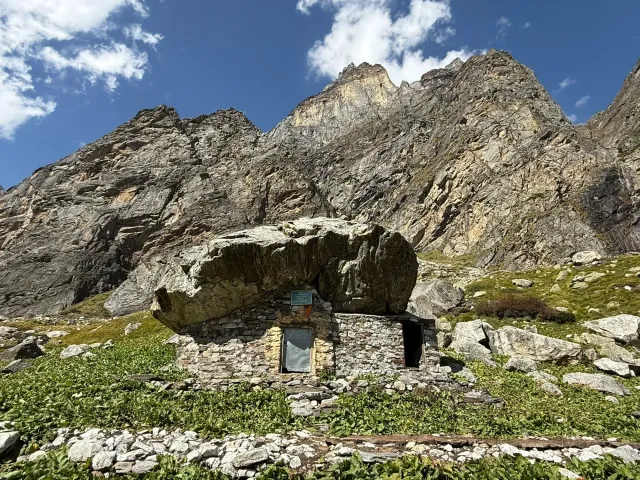
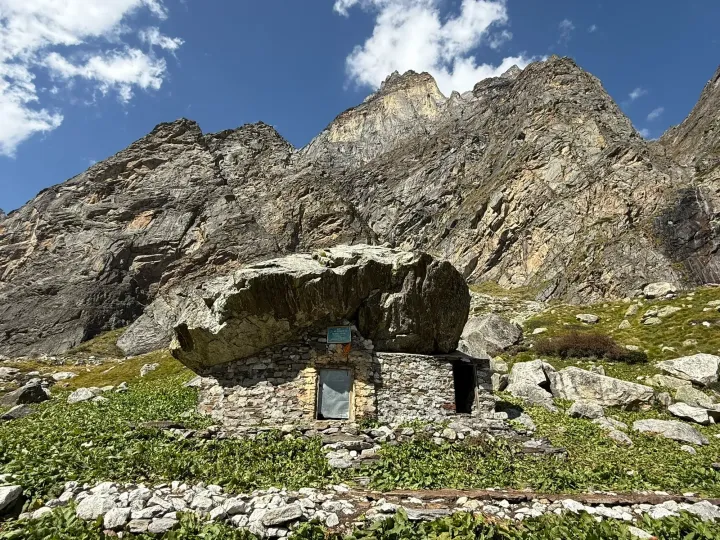
A pilgrimage to the Indian Himalayas above sacred Badrinath, to the cave of Sri Alakhpuriji, one of the places of tapasya of the great Himalayan masters. After Rishikesh, Devprayag, Joshimath and Badrinath, five days at the cave give time for meditation, satsang and quiet walks in the blessed presence of Swami Shri Avatarpuriji.
View the journey →from €1,450 per person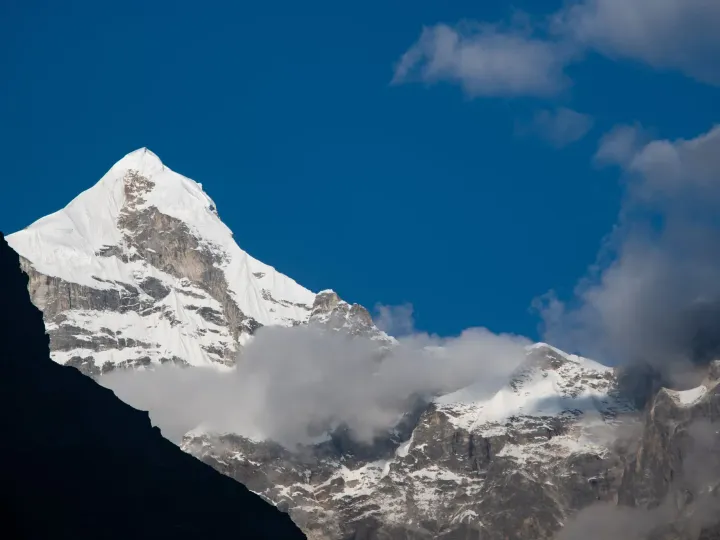
Pilgrimage to Sri Devpuriji's cave
Uttarakhand, Garhwal Himalaya
A pilgrimage to the Indian Himalayas above Badrinath that continues from Sri Alakhpuriji's cave into high mountain terrain to the cave of Sri Devpuriji at about 4,450 metres. The trek passes Laxmivan, Chakratirth and Satopanth beneath Neelkanth and Chaukhamba, places bound to the last journey of the Pandavas, before both groups return together to Haridwar.
View the journey →from €1,450 per person